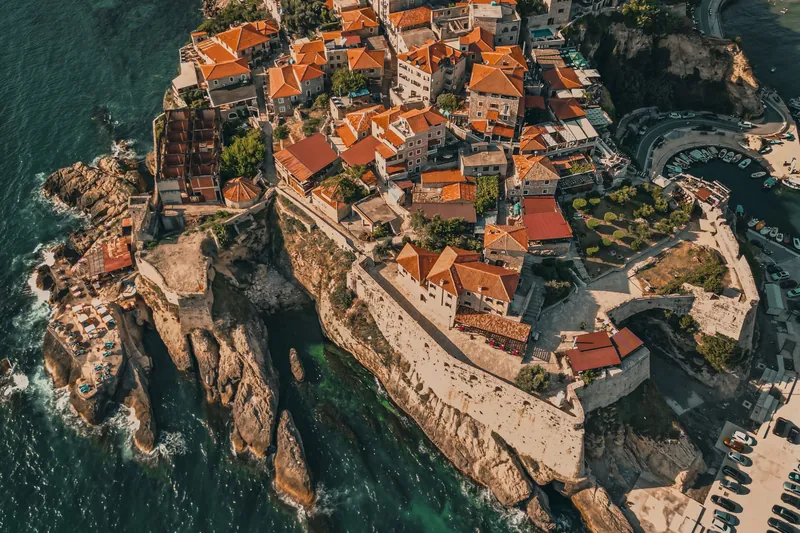


Ulcinj and Velika Plaža are Montenegro’s southern coast at its most different. Ulcinj is the country’s southernmost town, a few kilometres from the Albanian border, where minarets rise between the houses, the call to prayer drifts over the harbour and the old town sits on a rocky headland above a small sandy bay.
Just east of town begins Velika Plaža, the Long Beach: around twelve kilometres of fine sand running all the way to the Bojana river, which marks the border. At its end lies Ada Bojana, a triangular river island known for its riverside fish restaurants and its steady afternoon wind, which has made the area one of the best kitesurfing spots in the Adriatic.
Ulcinj is around an hour and three quarters from Tivat Airport and an hour and a quarter from Podgorica Airport, close enough for a long day out, though many visitors stay several nights.
A short history of Ulcinj
Ulcinj is one of the oldest towns on the eastern Adriatic. It was settled by Illyrians and Greeks, and under Rome it was known as Olcinium. Through the Middle Ages it passed between Byzantine, Serbian and Venetian hands, and the old town on the headland still has walls and towers from those centuries.
In 1571 the Ottoman Empire took the town, and it stayed Ottoman for more than three hundred years. In that period Ulcinj became notorious as a base for corsairs who raided shipping across the Adriatic and the Mediterranean; local tradition points to a small square in the old town as the place where captives were once sold. A popular legend even claims that Miguel de Cervantes was held here, though there is no evidence for it.
A better-documented visitor was Sabbatai Zevi, the 17th-century self-proclaimed Jewish messiah, who was exiled to Ulcinj by the Ottoman authorities and died here in 1676. After the Congress of Berlin in 1878, the town was handed to Montenegro a couple of years later. Today it is the centre of Montenegro’s Albanian community, which gives it its own language, food and atmosphere.
What to see and do in Ulcinj
The old town
Climb up from the harbour into the walled old town on its headland. The lanes are quiet, many houses have been restored as small hotels and restaurants, and the views from the walls over the sea and Mala Plaža below are lovely at sunset. A small museum near the old gate tells the story of the town.
Velika Plaža, the Long Beach
The beach is wide, sandy and shallow for a long way out, which makes it ideal for children. Sections near town are lined with beach bars and sunbeds; drive further along and you find quieter stretches with dunes and pine woods behind.
Ada Bojana and the river restaurants
At the end of the beach, the Bojana river forms a triangular island with its own beach facing the sea. Along the river bank, wooden restaurants on stilts serve the day’s catch, and an evening meal there is one of the region’s great simple pleasures. Part of the island is a long-established naturist resort.
Kitesurfing
In summer a reliable thermal wind blows most afternoons along Velika Plaža and at Ada Bojana, and several kite schools offer lessons and equipment hire for beginners and experienced riders. Mornings are calm, so families can swim before the wind picks up.
The Ulcinj salt pans
Behind the beach, the old saltworks have become a protected wetland and one of the best birdwatching sites on the Adriatic, with flamingos at some times of year. Access arrangements change, so check before you go.
Practical tips for visiting Ulcinj
June and September are ideal: warm sea, steady wind for kiting and fewer people. In July and August the beaches and town are very busy, especially at weekends, and the coast road from Bar can be slow.
Ulcinj is a predominantly Muslim town. Dress is relaxed on the beach, but cover up a little when walking in town or visiting a mosque. Sunbeds are paid on the spot, often in cash.
From the coast it makes a full day. If you want to enjoy both the old town at sunset and dinner by the river at Ada Bojana, consider staying a night. Beach and kitesurfing prices change by season, so check before you go.
Getting to Ulcinj from Tivat and Podgorica airports
| From | Distance | Driving time |
|---|---|---|
| Tivat Airport (TIV) | about 90 km | about 1 h 45 |
| Podgorica Airport (TGD) | about 75 km | about 1 h 15 |
From Tivat Airport it is about 90 km to Ulcinj along the coast road through Budva, Petrovac and Bar, roughly 1 hour 45 minutes, longer on summer weekends.
From Podgorica Airport it is about 75 km, around 1 hour 15 minutes, through the Sozina tunnel to Bar and then south along the coast.
A private transfer takes you from arrivals to your hotel in Ulcinj or on Velika Plaža at a fixed price, with child seats on request. For a day out, the driver can wait while you explore the old town and then take you to the beach or Ada Bojana. See fixed prices from Podgorica Airport or book your transfer.
Combine Ulcinj with nearby places
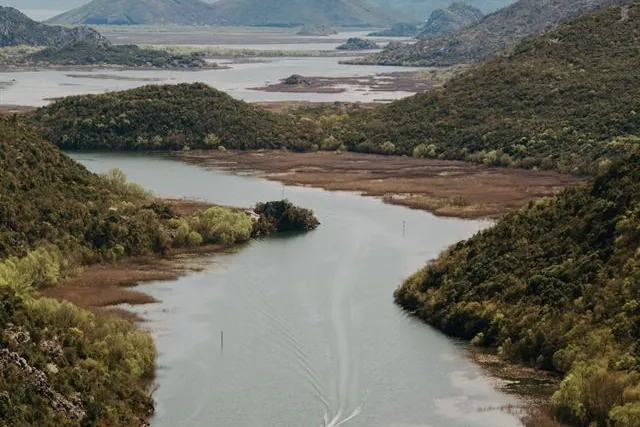
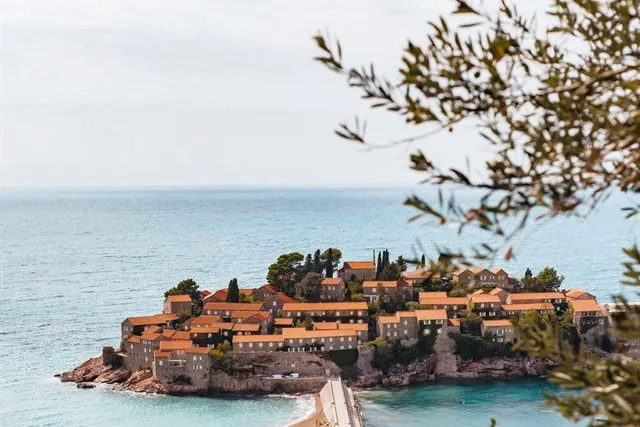
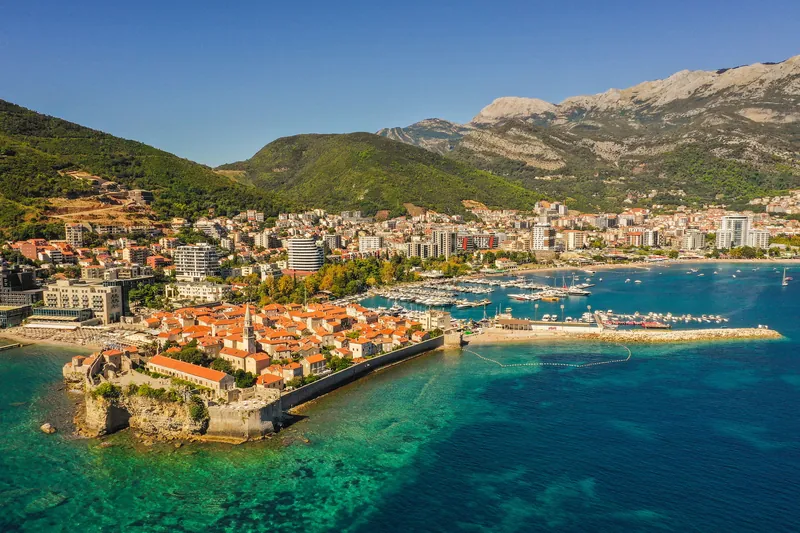
On the way down the coast you pass Sveti Stefan and Budva Old Town, and from Bar it is a short hop inland to Skadar Lake for a boat trip on the way back.
Questions people ask
How long is Velika Plaža?
Velika Plaža, the Long Beach, is around 12 to 13 km long, running from just outside Ulcinj to the mouth of the Bojana river at the Albanian border. It is the longest sandy beach on Montenegro’s coast, wide and shallow, with busy beach bars near town and quieter stretches further along.
Is Ulcinj worth a day trip from Budva or Kotor?
Yes, if you want sand and a different atmosphere. Ulcinj is about an hour and a half to two hours from Budva and further from Kotor. A day trip gives you the old town, a few hours on Velika Plaža and dinner at Ada Bojana, though staying a night makes it more relaxed.
Is Ulcinj good for kitesurfing?
Yes. In summer a steady thermal wind blows most afternoons along Velika Plaža and at Ada Bojana, and the shallow sandy water suits beginners. Several kite schools offer lessons and equipment hire. Mornings are usually calm, so non-kiters can enjoy the beach before the wind arrives.
What is Ada Bojana?
Ada Bojana is a triangular island at the mouth of the Bojana river, at the far end of Velika Plaža. It has a sandy sea beach, a long-established naturist resort and, along the river bank, wooden fish restaurants built on stilts over the water, which are popular for long summer dinners.